


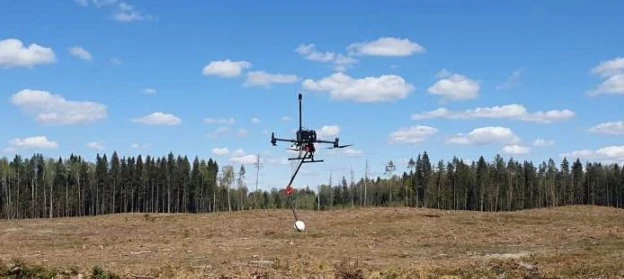
UgCS MagNIMBUS Gradiometer System
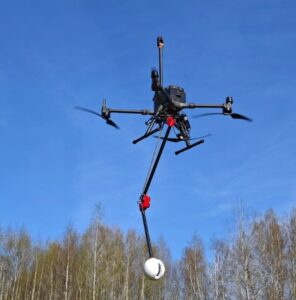
UgCS has launched their first UAV gradiometer system. The ultra-sensitive UAV gradiometer system is powered by QuSpin Gen-2 atomic total-field magnetometer sensors. Its unique design enables extremely low surface-to-sensor clearance. The spherical sensor can touch the ground or vegetation without causing the drone to crash.
This capability is extremely important when searching for small UXO items over fields with vegetation. The self-foldable sensor mount allows easy take-off and landing without requiring advanced piloting skills, which operators typically need when using magnetic sensors on suspension cords.
MagNIMBUS comes in two possible configurations
- Vertical UAV gradiometer.
This configuration greatly simplifies data processing and makes the need for a magnetic base station unnecessary. - Configuration with a single sensor with a foldable mount.
Detection capabilities are the same as for the gradiometer setup, but it requires experienced specialists for data processing. A magnetic base station is recommended in case of surveys close to sources of environmental magnetic fields.
Typical Applications
- Searching for UXO (unexploded ordnance) and landmines in metallic casings
- Tramp metals and lost GET (ground engagement tools) detection
- Locating buried infrastructure (metal pipes and shielded cables)
- Archaeology
- Surveying for any metal objects weighing a hundred grams or heavier lying underground
The system can detect a wide range of items, from hand grenades (estimated sensor-target distance for robust detection for targets like F1 fragmentation hand grenades is 1.0 m) to large explosive remnants of war like aerial bombs at a distance of a few metres. While the system is capable of detecting some specific types of landmines (TM-62M, OZM-72 and similar types with a considerable amount of ferrous metal), landmine search is not a primary application of the system, as it can miss many types of low-ferrous landmines. Operators cannot use the system to confirm the absence of landmines and should not rely on it for that purpose.
For further information on this system, click this link: MagNimbus